To the point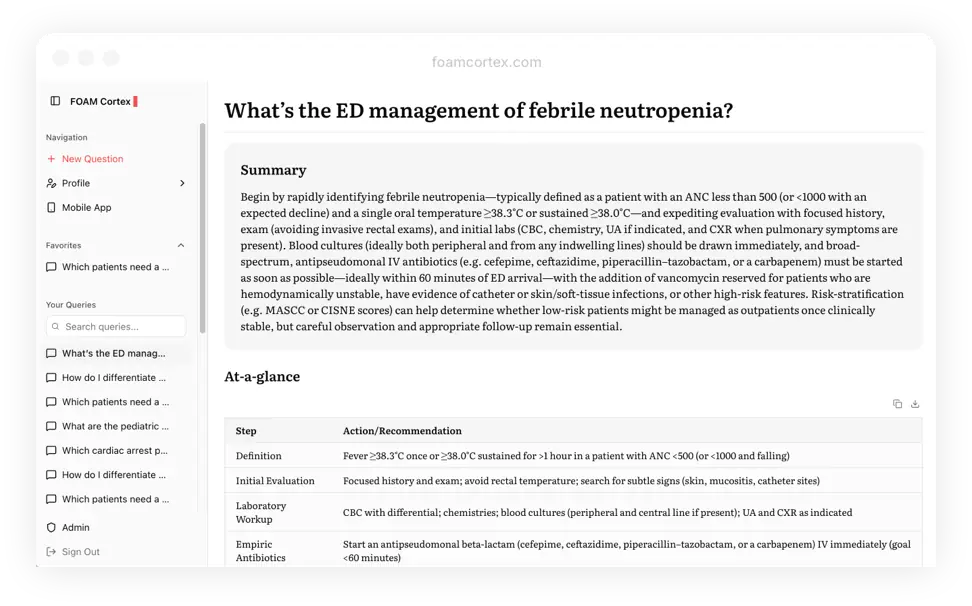
Succinct for Critical Decisions
FOAM Cortex delivers concise, decision-ready answers for emergency care, not bloated AI essays that waste time when minutes matter.
FOAM Cortex turns bedside questions into succinct, cited, stepwise guidance grounded in the FOAMed sources emergency clinicians actually use.
No account required to start. After your 3 questions you can register to keep going with unlimited questions.

Keep exploring
Then ask your own and get a cited response in seconds.
FOAM Cortex is such a great practical resource for any emergency doc on shift. The responses are reliable and concise. I recommend it to all my rotating students and residents.
FOAM Cortex provides relevant, timely information to assist me on shift and help reduce the cognitive burden of making critical decisions to take better, safer care of my patients while also providing quick teachable moments with my residents and medical students.
FOAM Cortex gives you fast, clinically usable answers for acute care, with structure, citations, and controls you won't get from others.
FOAM Cortex delivers concise, decision-ready answers for emergency care, not bloated AI essays that waste time when minutes matter.
Each response is organized around what you asked, with clear sections you can scan in seconds and apply immediately.
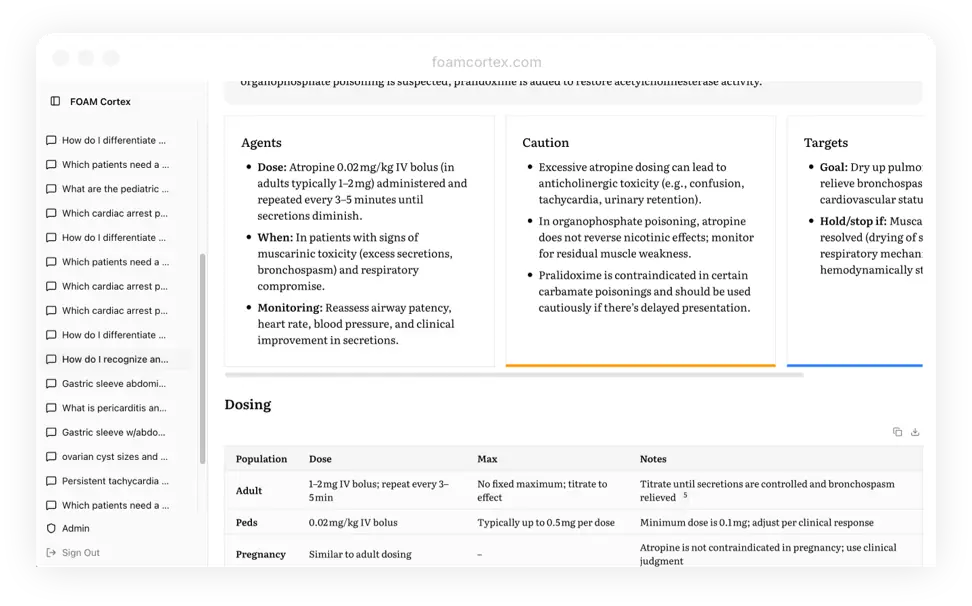

Set how many references you want, prioritize newer evidence, and adjust source weighting to match your clinical context.
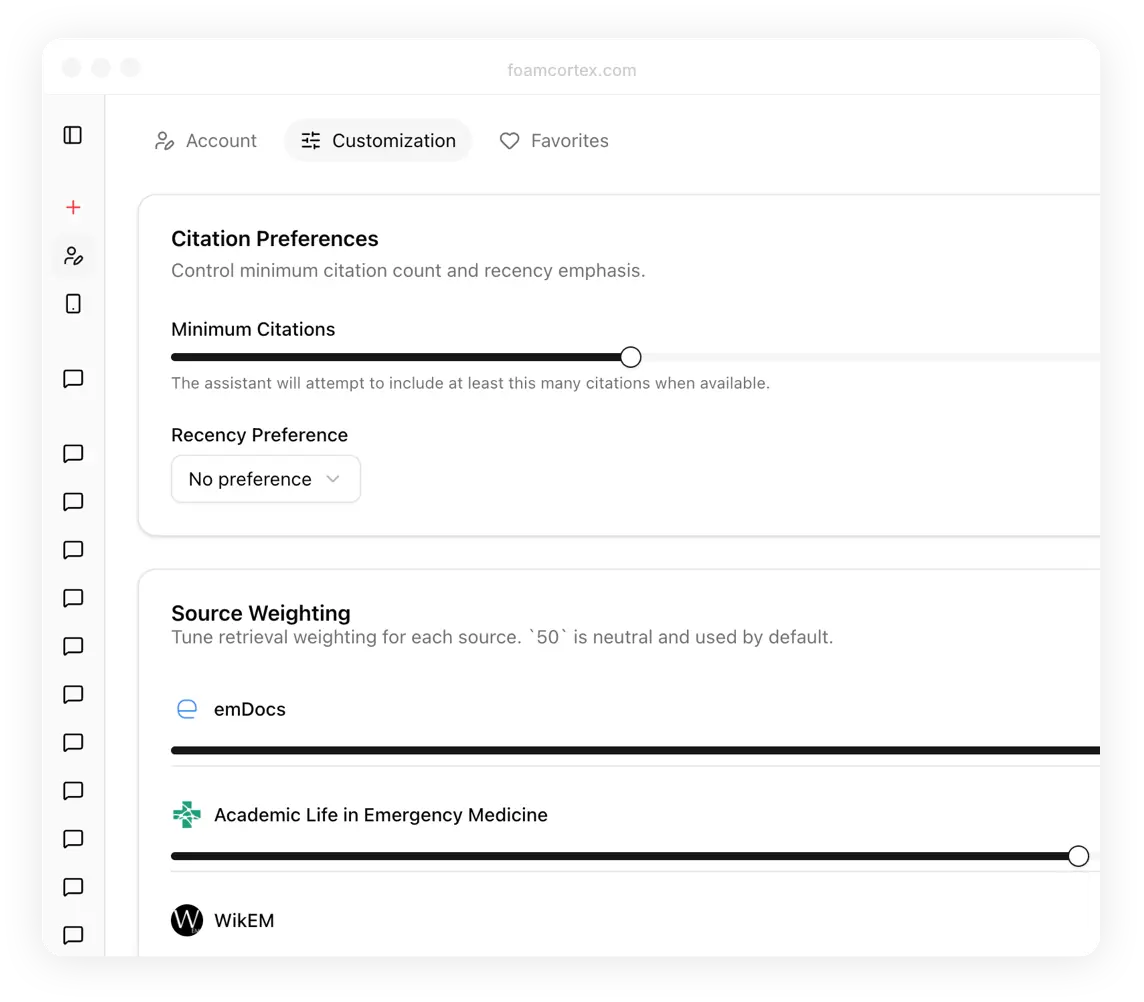
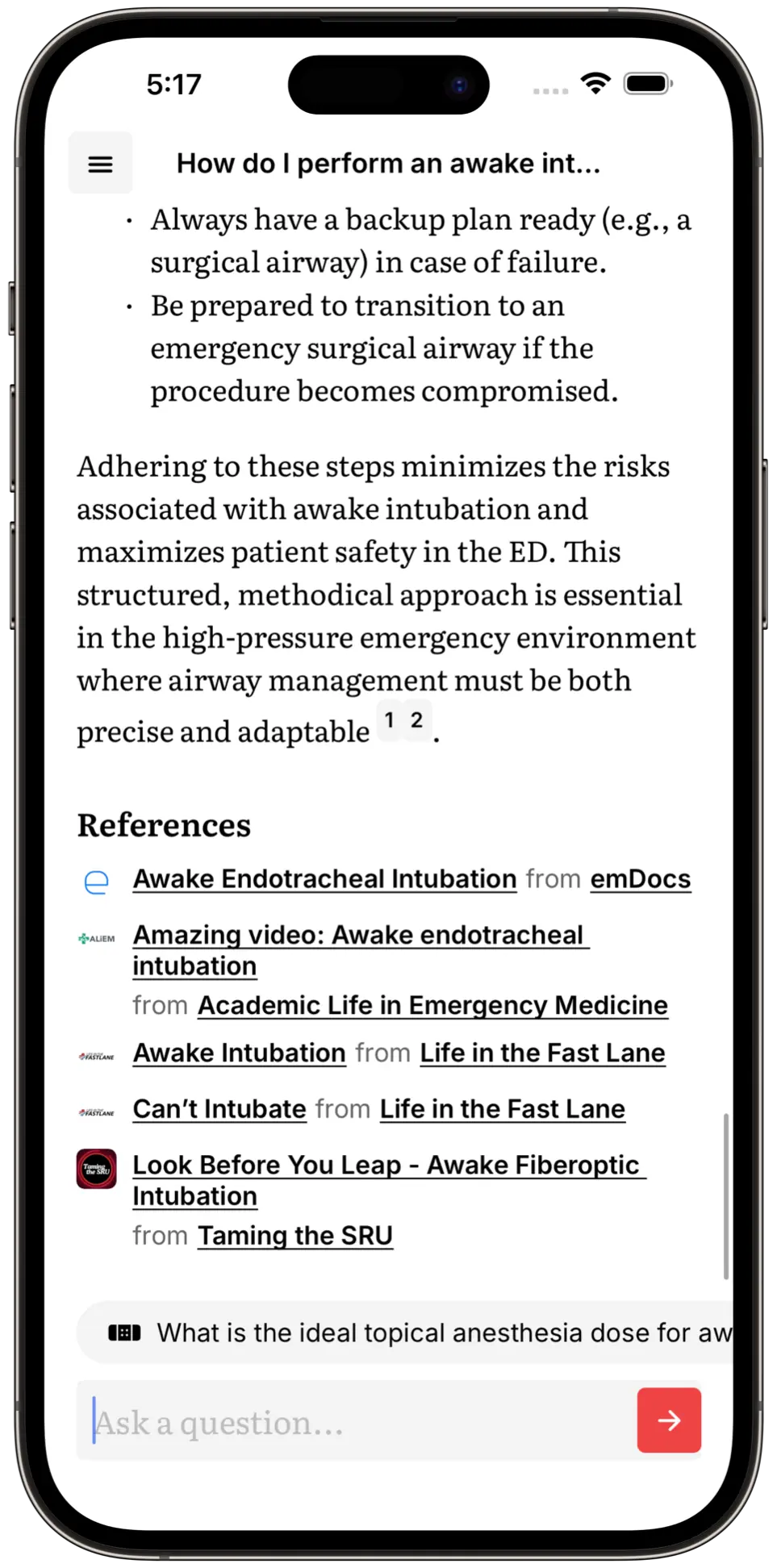
FOAM Cortex is optimized for on-the-go emergency practice, so you can quickly pull evidence, review structured answers, and make decisions without breaking workflow.
Combine trusted FOAM evidence with your organization's protocols and priorities to deliver answers that are both high quality and locally actionable.
Upload documents or connect selected Google Drive™ folders for read-only synchronization so answers align with institutional standards.
Set retrieval priorities so institutional guidance is ranked first and response quality stays consistent.
Minimum citations
Source weighting
Control invites, role-based permissions, and audit visibility across teams and services.
Start with 3 free queries, then remember your trial answers and continue with unlimited questions.
From the educators you trust.
Explore all sources





New reads, brief summaries, and the educators behind them.
Read moreBrowse the archiveLatest issue
9 highlights · 7 sources
In this single-center retrospective cohort study of 161 pediatric ED patients (≤22 kg), high-dose intranasal midazolam (0.5 mg/kg) was associated with lower rates of additional sedation or documented failure compared to low-dose (0.2 mg/kg), with no significant difference in adverse events or ED length of stay. Key limitations include disproportionate group sizes and small sample.
Read this issueemDocs reviews CHANTER syndrome, a rare pattern of cerebellar, hippocampal, and basal nuclei injury following drug overdose. It highlights persistent altered mental status, characteristic MRI findings, and the potential for treatable cerebral edema, explaining why recognition matters when imaging might otherwise suggest irreversible hypoxic injury.
Read this issue